You all have different opinions regarding yoga, and your journey is different. Some want to learn yoga personally or professionally, and some have a question: How do you become a yoga instructor? If this question is in your mind, you are already learning yoga under some instructor or teacher, and now you want to take your practices to the next level.
Some of you started practicing yoga in a gym or studio, and the reason for your beginning of the yoga journey is different; some started Yoga because of health issues, and some started because of being overweight or maybe in school as a sport, but you feel that yoga transformed your life. You want to share your experience with others and have questions about starting a professional career in yoga and becoming a yoga instructor.
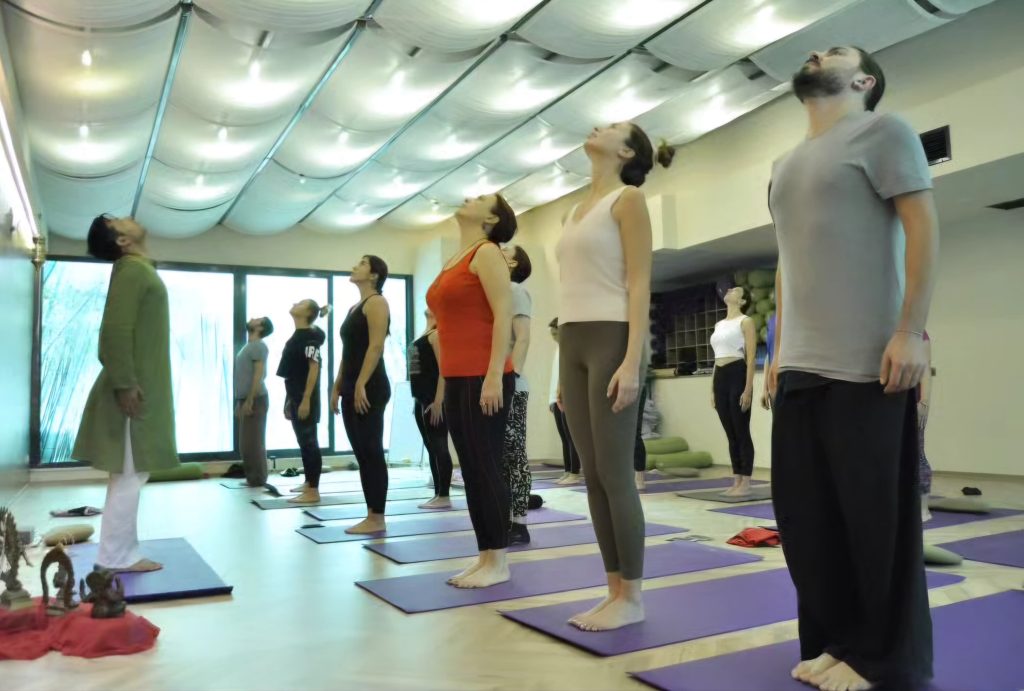
To become a yoga instructor, you must learn and understand practical aspects, including cleansing practices, asana, mudras, pranayama, meditation, yogic philosophy, yogic diet, and teaching methodology. You should learn and understand the proper structure of yoga. However, more than certification, you must assist experienced yoga instructors for years and learn from them.
So, let’s understand the journey to becoming a yoga instructor; here, we will discuss various yoga certificates to help you validate your professional life.
What do you understand the term Yoga Instructor?
A yoga Instructor is a trained professional who gives yoga instructions and teaches yoga, guiding students through asana, pranayam and meditation techniques. Yoga Instructors also design their classes according to student levels and teach them from beginner to advanced levels.
Yoga instructors focus on the correct alignment of asana, body-mind coordination, proper and accurate techniques of asana and pranayama, and the safety of students during their classes.
A yoga instructor creates a supportive environment during the class, and their approach is always toward holistic well-being. They also guide lifestyle, diet, wellness, and yoga philosophy.
India is the land of seekers, and you get the answers in the process of seeking. In the process of seeking, seekers need help or guidance from these enlightened or experienced gurus, and these gurus taught and guided other seekers through their experiences.
There are many gurus, but here I am presenting the interpretation of Yoga teachings and philosophies of a few yoga gurus, such as Swami Sivananda, B.K.S Iyengar and Pattabhi Jois; we can define yoga instructors based on their work and writings,
Swami Sivananda wrote extensively on the spiritual aspects of yoga, emphasising the role of the teacher as a guide in spiritual growth. So, according to his teachings and writings, A yoga instructor is like a spiritual guide who imparts knowledge and wisdom to help students realise their true nature. The instructor’s role goes beyond teaching asanas; it includes guiding students in the principles of yoga, such as discipline, ethics, and self-awareness.
B.K.S. Iyengar emphasised precision and alignment of asana during yoga practices. He believes that a yoga instructor should be a living example of the principles of yoga. The instructor’s role is to lead by example and help students. So students can develop strength, flexibility, and clarity with proper precision and alignment in both body and mind.
Pattabhi Jois focuses on the tradition of Ashtanga Yoga, where the instructor plays a vital role in ensuring the disciplined practice that leads to deeper spiritual awareness. So, according to his teachings, the instructor helps their students cultivate disciplined practice, which is the foundation for spiritual growth.
Understanding more about Yoga Certifications
Becoming a yoga instructor is not just about certificates. Although various yoga certifications and lineage are available, it is up to you what you want to achieve through your yoga certification.
Yoga is an ancient system where knowledge passes through the gurukul tradition, where gurus conventionally teach students. To learn in the system, you must find a proper guru and live in their Ashram, practice his teachings with proper discipline for many years; during this process, you can learn yoga and seek the ultimate truth. However, in this learning process, you can’t get any certifications, and when the guru feels that you are ready to teach others, the guru gives you the instructions to go and teach others. If teaching others is not essential for your seeking, then you only need to practice and achieve the ultimate aim of yoga.
The traditional system is for seekers, but to teach others professionally, you don’t need to choose the traditional way because the conventional way is for the seekers.
Yoga is a big market, and there are various career opportunities in this field; if you want to choose yoga as a career and start earning through yoga teaching, then you need to understand the popular yoga certification schemes available in the market and opt for your convenience.
If you want to work in any school, college, organisation, or government job, you must get your yoga certifications through any university recognised by UGC. Opting for these options, you need to get a degree, postgraduate diploma, or master’s course in yoga through any State or Central University or associate college.
Suppose you want to join or teach any lineage, such as Sivananda, Bihar School of Yoga, Iyengar School, Art of Living, Isha Foundation, etc. In that case, you first need to join that lineage and then practice or certification through that yoga lineage.
However, if your yoga instructor certification aim is to teach yoga in studios, gyms, or independently, In that case, you can choose certifications such as Yoga Alliance or the Yoga Certification Board (YCB) affiliated with the Ministry of AYUSH.
To become a yoga instructor, you can choose any option that is convenient for you. All certifications provide you with a basic structure and an understanding of yoga.
It’s up to you what options you want; you can join any traditional yoga lineage or opt for the Yoga Certification Board under the Ministry of AYUSH, which gives you certificates on various levels and categories, Yoga Alliance, a U.S-based private yoga certification body provides 200 or 300 hours certifications which is available in multiple yoga schools in all over globe and these yoga schools offers Yoga Teacher Training Course (YTTC) is also an option to become a yoga instructor, or you can get certificates, degrees, or diplomas through any college or university.
Steps to Become a Certified Instructor
You already understand how to become a yoga instructor and know the various certification bodies. Let’s understand it more in steps,
The steps to becoming a yoga instructor are to deepen your yoga practices, understand the proper structure of Yoga teaching through any certification body according to your prior objectives, and then complete your yoga training, which includes yoga philosophy, anatomy, teaching techniques, practical teaching experience etc. and after the assessment get your certifications and start gaining experience initially you can assist your teachers and then gradually work in various organisations such as gym, studio etc. or gain experience privately.
FAQs
- How long does it take to become a certified yoga instructor?
Becoming a good yoga instructor is about your experience and hard work, and it’s a continuous and lifelong process. Still, according to certification, it depends on your previous knowledge and on what certification you choose. If you have prior knowledge, you can select ‘Yoga Certification Body’ (YCB), and if you don’t, you can learn yoga courses from registered yoga schools by YCB. After your assessment, you can be a yoga instructor. You can also do a 200-hour or 300-hour teacher training course from any registered Yoga Alliance school, and after the assessment, you can get your certificates.
- How much does yoga teacher training cost?
Yoga teacher training costs may vary depending on the certification body and the school.
- Do I need prior experience in yoga to become an instructor?
You don’t need experience in yoga to get a yoga instructor certificate, but after enrolling in yoga school, you need to learn and practise. However, after you complete your certification, you’ll need to assist an experienced yoga instructor to gain experience.